Vol. 2 No. 1 (2022): Between Global Standardization and Regional Identity
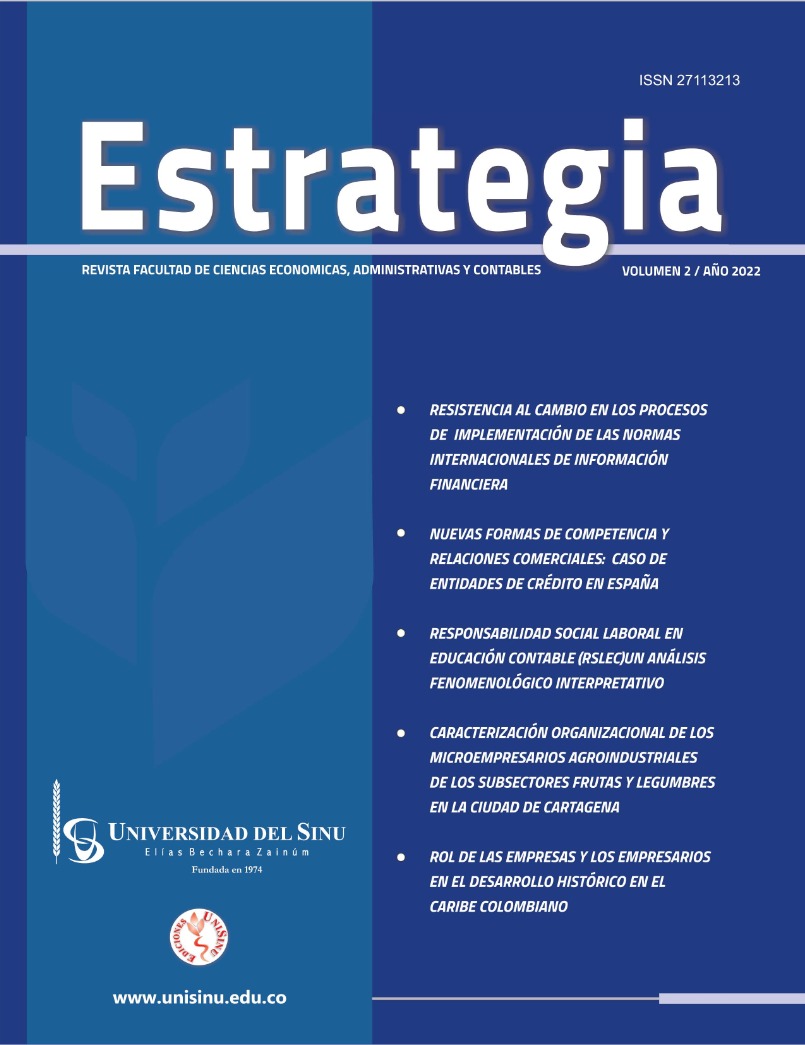
The year 2022 became established as the stage of the “new normal,” a period in which organizations not only had to resume their operations, but also assimilate the structural transformations accelerated by the pandemic. In this context, the journal ESTRATEGIA presents an edition that invites reflection on the duality faced by contemporary managers: the need to comply with highly demanding international standards while also maintaining sight of the particularities of the local business environment.
We open this issue with a critical analysis of resistance to change in the implementation of IFRS. This study reminds us that, beyond accounting frameworks and algorithms, organizations are made up of people; the success of any technical standard depends on the management of human and cultural factors. This global perspective expands through an examination of the European market, analyzing new forms of competition among credit institutions in Spain, a valuable mirror for understanding financial disintermediation trends that eventually impact our emerging markets.
However, the heart of this edition beats strongly in the Colombian Caribbean. The research on the characterization of agro-industrial microentrepreneurs in Cartagena highlights the resilience of the fruit and vegetable subsectors, pillars of food security and the popular economy. Added to this is the necessary continuation of the study on social responsibility in healthcare SMEs, a sector that, following the health crisis, has had to redefine its ethical commitment to the community.
Finally, we conclude with a note of identity and pride: the study on the role of companies and entrepreneurs in the historical development of the Colombian Caribbean. Understanding where we come from and how capital and industries were forged in our region is essential for projecting a future of strong business leadership and a sense of belonging.
From the Faculty of Economic, Administrative, and Accounting Sciences, we present this volume as a contribution to the dialogue between the global and the local, reaffirming our commitment to the dissemination of knowledge that positively transforms our environment.
Published:
2022-10-17